Éternel Secret Laboratory
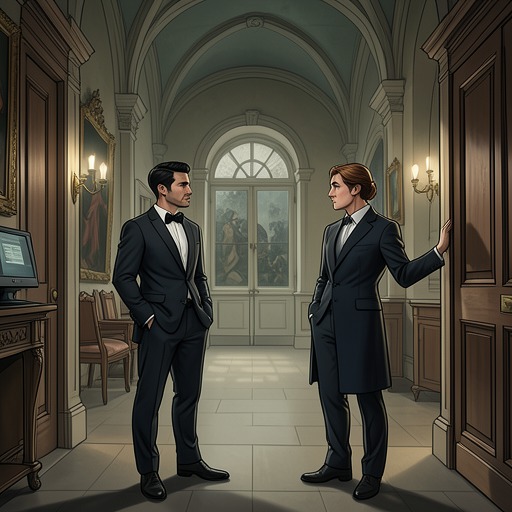
The Wife He Threw Away: A Billionaire Secret Baby, Marriage-in-Crisis, Second-Chance Grovel RomanceThe Éternel Secret Laboratory is the concealed twenty-second-floor workshop where Ada Hart creates Éternel, the fragrance whose authorship becomes the central wound of her marriage to Sebastian Vale. More than a corporate facility, it is the one part of Vale Group that belongs entirely to Ada: a private room of craft, memory, and authority that is later converted into evidence against the public lie assigning her work to Chloe Beaumont.
Definition and Setting
The laboratory occupies the unmarked twenty-second floor of Vale Group Headquarters and is accessible through Ada’s thumbprint alone. Sebastian built it during the first year of their marriage and called it her “secret kingdom,” a phrase that captures both its intimacy and its separation from the company’s glittering public machinery. Its privacy gives Ada a protected realm in which her expertise does not have to pass through family status, board approval, or a marketable face.
Inside, the room is organized around a tiered bench holding two hundred essences. Ada uses this perfume organ as a composer uses a set of notes, assembling fragrances through combinations rather than treating scent as a decorative accessory. Éternel is complete before its launch, yet Ada returns to the mother bottle for one final inspection, checking it with the anxious tenderness of someone verifying that a sleeping child is still breathing. The laboratory therefore joins technical precision to intimate care: the finished fragrance is both a product and the record of two years of her life.
The Laboratory and the Theft of Authorship
The laboratory’s secrecy makes the launch betrayal especially severe. Although the room is keyed to Ada’s thumbprint, the public ceremony presents Chloe Beaumont as the person behind Éternel. The launch language describes a visionary who poured her soul into the scent and identifies Chloe as both its muse and artist, while Chloe claims to have dreamed of the fragrance despite never having entered the laboratory. The room thus contains a truth that the gala attempts to replace with a more commercially convenient fiction.
Sebastian’s complicity turns the laboratory from a sanctuary into the scene of a formal transfer of ownership. After the launch, legal documents designate Chloe as Creative Director, Maison Éternel, giving the false authorship institutional weight through endorsement rights, likeness, and licensing structures. Sebastian signs the appointment in four seconds, effectively placing the title of Ada’s creation in the hands of a woman who has never set foot in the room. The violation is not only personal; it is administrative, because corporate language makes dispossession appear to be ordinary brand management.
Evidence, Memory, and Return
When Ada leaves, the laboratory remains physically present but emotionally abandoned. Sebastian can continue operating Vale Group while she is absent, yet the room refuses the story that the marriage has merely entered a temporary silence. Returning to the dark, unmarked floor, he expects the lock to reject him because the laboratory was designed for Ada alone. Instead, the system recognizes his authority as the person who paid for the walls and admits him into the space that belongs to her.
The room confronts him through its material traces. Ada is present in the two hundred bottles arranged like a choir, in the white coat hanging on its hook, and in a blotter left on the floor eleven days earlier. Most decisively, the unstoppered mother bottle releases the sandalwood-and-jasmine scent associated with the field outside Grasse, where Sebastian once proposed to Ada. The laboratory preserves the proposal, the work, and the absent maker at once; its objects make denial more difficult than any argument could.
The later audit gives the laboratory a documentary function. Records show that Éternel took twenty-six months to create and that the thumbprint reader recorded one authorized print, Ada’s, 411 times. Chloe’s print appears only once, two weeks before the gala, after an executive override provisioned by Sebastian. The access log transforms the room’s atmosphere into verifiable proof: what had been treated as a matter of branding becomes a chronological record of authorship.
Institutional Conflict and Narrative Significance
The laboratory stands in opposition to the ideology represented by the Vale family. Sebastian’s mother and the board value the public image of the company, while the laboratory values the invisible labor that produces the fragrance. Their preferred version of Éternel requires Chloe’s face and Ada’s disappearance; the room keeps Ada’s actual presence attached to every stage of creation. Even the later threat against Maison Cendre echoes the same attempt to erase her, making the laboratory the first site in a repeated struggle over whether her name will be recognized.
Its significance also changes with Sebastian’s moral transformation. At first, he treats the laboratory as an asset he can manage, authorizing Chloe’s access and accepting the corporate fiction built around it. Later, he understands that he cannot acquire what he has wronged into existence. His decision not to take Theo Hart through custody tactics belongs to the same ethical reversal: he refuses to treat people as companies and begins to recognize that love, authorship, and family cannot be secured by possession.
The laboratory’s final force lies in its refusal to be reduced either to a room or to a symbol. Its bottles, access records, coat, blotter, and mother bottle actively preserve the history that the gala and the company try to overwrite. When the truth of Éternel’s creation is finally faced, the twenty-second floor becomes the place where the difference between a brand’s story and a creator’s life can no longer be concealed. It is Ada’s secret kingdom, the scene of her erasure, and the archive from which her authorship returns.